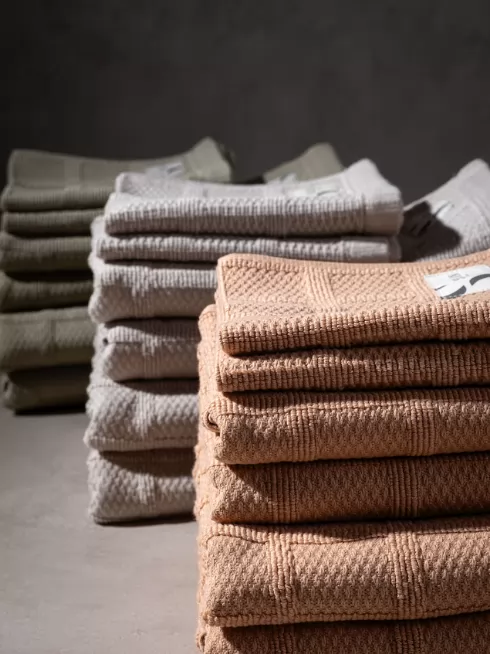
Stiff and scratchy towels are usually caused by detergent residue, hard water minerals, fabric softener buildup and incorrect drying rather than by worn-out fabric. Natural treatments such as white vinegar, baking soda and strip washing remove this buildup, while correct dryer settings, shaking and a finishing tumble bring the loops back to life. This guide also explains why washing towels separately helps and how to recognize when a towel is too worn to restore.
Why Do Towels Get Hard and Scratchy?
Towels are made of terry cloth (a cotton fabric woven with raised loops that absorb water), and their softness depends on these loops staying open and flexible. Over time, detergent, minerals and softener coat the fibers and glue the loops together, so the surface feels rough instead of plush. Overdrying and high heat then make the cotton brittle, which adds to the stiffness.
Air drying without movement is another common cause. When towels hang still while drying, the loops flatten and harden as water evaporates. In most cases, these problems are reversible because the cotton itself is still intact underneath the buildup.
Can Old Towels Be Made Soft Again?
Most old towels can be made soft again if the stiffness comes from residue rather than fiber damage. A towel that feels rough but still has full, dense loops usually responds well to a deep cleaning routine. Learning how to get towels soft and fluffy again is therefore mostly about removing what has built up, not adding new products.
Restoration has limits, though. Towels with thinning patches, broken loops or heavy fraying have lost fiber, and no treatment can bring that back. For these, the methods in this guide improve comfort slightly but cannot return the original thickness.
How White Vinegar Restores Softness to Stiff Towels
White vinegar is a mild acid that dissolves detergent residue and mineral deposits trapped in towel fibers. Once this layer is gone, the loops can move freely again and absorb water as they did when new. Vinegar also neutralizes musty odors without leaving any scent once the towel dries.
For the best result, wash towels in hot water with one cup (about 240 ml) of white vinegar and no detergent. This is the simplest first step for anyone exploring how to get towels soft and fluffy again, and it works equally well on bath towels, hand towels and a Turkish hair towel that feels rough after frequent use.
How Baking Soda Brings Back Towel Fluffiness
Baking soda (sodium bicarbonate, a mild alkaline cleaner) loosens dirt and body oils that stay in the fibers after regular washing. It also softens the water slightly, helping the rinse cycle carry residue away more effectively. The result is a lighter, fluffier towel that smells clean.
Add half a cup of baking soda to a hot wash without detergent, ideally right after a vinegar cycle. Vinegar and baking soda should not go into the same cycle, because the acid and base neutralize each other and lose their cleaning effect.
How to Strip Wash Towels to Remove Residue
Strip washing (a deep cleaning method that pulls out accumulated detergent, softener and mineral buildup) is the most effective treatment for towels that feel stiff no matter how they are washed. It combines soaking and hot water to release residue that normal cycles leave behind. This method is the core of how to get towels soft and fluffy again when lighter treatments are not enough.
- Fill a bathtub or large basin with hot water.
- Dissolve a quarter cup of baking soda, a quarter cup of borax (a natural mineral cleaner) and half a dose of detergent in the water.
- Submerge the towels and soak them for four to six hours, stirring occasionally.
- Drain the water, then run the towels through a rinse cycle with no added products.
- Dry them on low heat with a good shake before and after.
Cloudy or gray soaking water shows how much residue was trapped in the fibers. Strip washing once every few months is enough for most households, as frequent use can be harsh on colored towels.
How Detergent Buildup Makes Towels Hard
Excess detergent does not rinse out fully, and the leftover soap dries inside the loops like a thin film. Each wash adds another layer, so towels gradually become stiffer, less absorbent and slightly sticky to the touch. Powder detergents that do not dissolve completely make this problem worse.
Using about half of the recommended dose and choosing a mild liquid detergent prevents buildup from forming again. Adding an extra rinse cycle, especially for thick towels, makes sure the fibers come out clean.
Does Hard Water Make Towels Stiff?
Hard water (water with high levels of calcium and magnesium) is one of the main reasons towels lose their softness. The minerals settle inside the fibers during every wash and bind with detergent, creating a rough, chalky layer. Towels washed in hard water also tend to look dull or grayish.
A water softener, a detergent designed for hard water or a regular vinegar rinse helps reduce mineral deposits. In commercial settings, a Turkish towels hotel collection is usually washed with treated water to keep every towel soft through hundreds of cycles.
Why Fabric Softener Ruins Towel Softness Over Time
Fabric softener makes towels feel smooth after the first few washes, but the effect is temporary. It works by coating fibers with a waxy, water-repelling layer that slowly builds up and stiffens the loops. As the coating thickens, towels absorb less water and start to feel slick instead of soft.
Dryer sheets leave a similar residue. Skipping softener completely and using vinegar or wool dryer balls instead keeps towels soft without sacrificing absorbency.
Why Shaking Towels Before Drying Makes Them Fluffier
After the spin cycle, wet towels come out compressed with their loops pressed flat. Giving each towel a firm shake before drying separates the fibers and lifts the pile (the raised loop surface of the towel). This small step allows warm air to reach every part of the fabric evenly.
Shaking also prevents towels from clumping together in the dryer, which reduces drying time and uneven stiffness. It takes only a few seconds per towel but makes a noticeable difference in fluffiness.
Best Dryer Settings for Soft, Fluffy Towels
Dryer heat has a direct impact on softness. High heat dries quickly but makes cotton brittle and shrinks the fibers, while low to medium heat keeps them flexible. Choosing the right setting is one of the easiest ways of how to get towels soft and fluffy again after washing, and the table below shows the most suitable options.
| Dryer Setting | Effect on Towels | Recommended Use |
|---|---|---|
| High heat | Fast drying but brittle, rough fibers | Avoid for regular use |
| Medium heat | Balanced drying and softness | Thick bath towels and bath sheets |
| Low heat | Gentle on fibers, keeps loops soft | Everyday towels and premium cotton |
| Air fluff (no heat) | Softens without drying | Finishing air-dried towels |
Wool dryer balls (felted wool balls that separate laundry in the drum) improve airflow and shorten drying time. Removing towels as soon as they are dry, rather than letting them overdry, keeps the fibers soft and supple.
How to Fluff Air-Dried Towels With a Finishing Tumble
Air drying saves energy and protects fibers from heat, but towels dried without movement often feel stiff. The loops settle and harden as the water evaporates, leaving a crunchy texture. A short finishing tumble solves this problem without losing the benefits of air drying.
Hang towels in a well-ventilated area until they are almost dry, then tumble them for 5 to 10 minutes on low heat or the air fluff setting. The movement loosens the fibers and restores a plush feel. A strong shake before folding completes the process.
Why Washing Towels Separately Keeps Them Soft
Towels need plenty of space and water to rinse thoroughly. When they share a load with clothing, the drum becomes crowded, detergent rinses out less effectively and residue stays behind in the fibers. Zippers, buttons and rough fabrics also create friction that damages the loops.
Washing towels alone, or only with similar terry items such as bathrobes from a reliable bathrobe manufacturer, keeps them softer for longer. It also prevents lint (loose cotton fibers) from sticking to other clothes.
When Is It Time to Replace Your Towels?
Even with careful care, every towel eventually reaches the end of its useful life. Most quality towels last two to five years depending on how often they are used and washed. The following signs show that a towel can no longer be restored.
- Thinning fabric: Areas that look see-through or feel noticeably thinner have lost fiber.
- Frayed edges and loose loops: Damaged hems and pulled threads continue to unravel with every wash.
- Persistent odor: A musty smell that returns after strip washing often means mildew has settled deep in the fibers.
- Poor absorbency: Towels that push water around instead of soaking it up have lost their working surface.
- Lasting stiffness: If vinegar, baking soda and strip washing do not help, the cotton itself is worn.
Replacing worn towels with well-made Turkish bath towels restores comfort quickly. Long-staple Turkish cotton (cotton with longer fibers that create stronger and smoother yarn) becomes softer with every wash, which is why trusted Turkey towel manufacturers build their premium ranges around it.
Frequently Asked Questions
Can I use vinegar every time I wash towels?
Vinegar is safe for regular use but not necessary in every wash. Adding half a cup to the rinse cycle every three or four washes is enough to prevent residue buildup. More frequent use can slowly weaken elastic trims on some towels.
How often should I strip wash my towels?
Every three to four months is ideal for most households. Towels washed in hard water or with heavy detergent use may benefit from a strip wash every two months. Over-stripping colored towels can cause slight fading.
Why do my towels feel hard after air drying?
The loops flatten and harden when towels dry without movement. A five to ten minute tumble on low heat or the air fluff setting loosens the fibers. Shaking the towel before hanging also helps.
Why do towels lose their softness after a few months?
Gradual buildup of detergent, softener and minerals is the main reason. Each wash adds a thin layer of residue that stiffens the fibers. Reducing detergent, skipping softener and using vinegar regularly keeps towels soft for much longer.
Do tennis balls work as well as dryer balls?
Clean tennis balls can separate towels in the dryer, but they may release a rubber smell at high heat. Wool dryer balls are quieter, odor-free and also absorb some moisture to shorten drying time. Three to four balls per load give the best result.
Applying these answers alongside the methods above turns towel care into a simple, repeatable routine. With the right habits, even older towels can feel soft, fluffy and absorbent again.