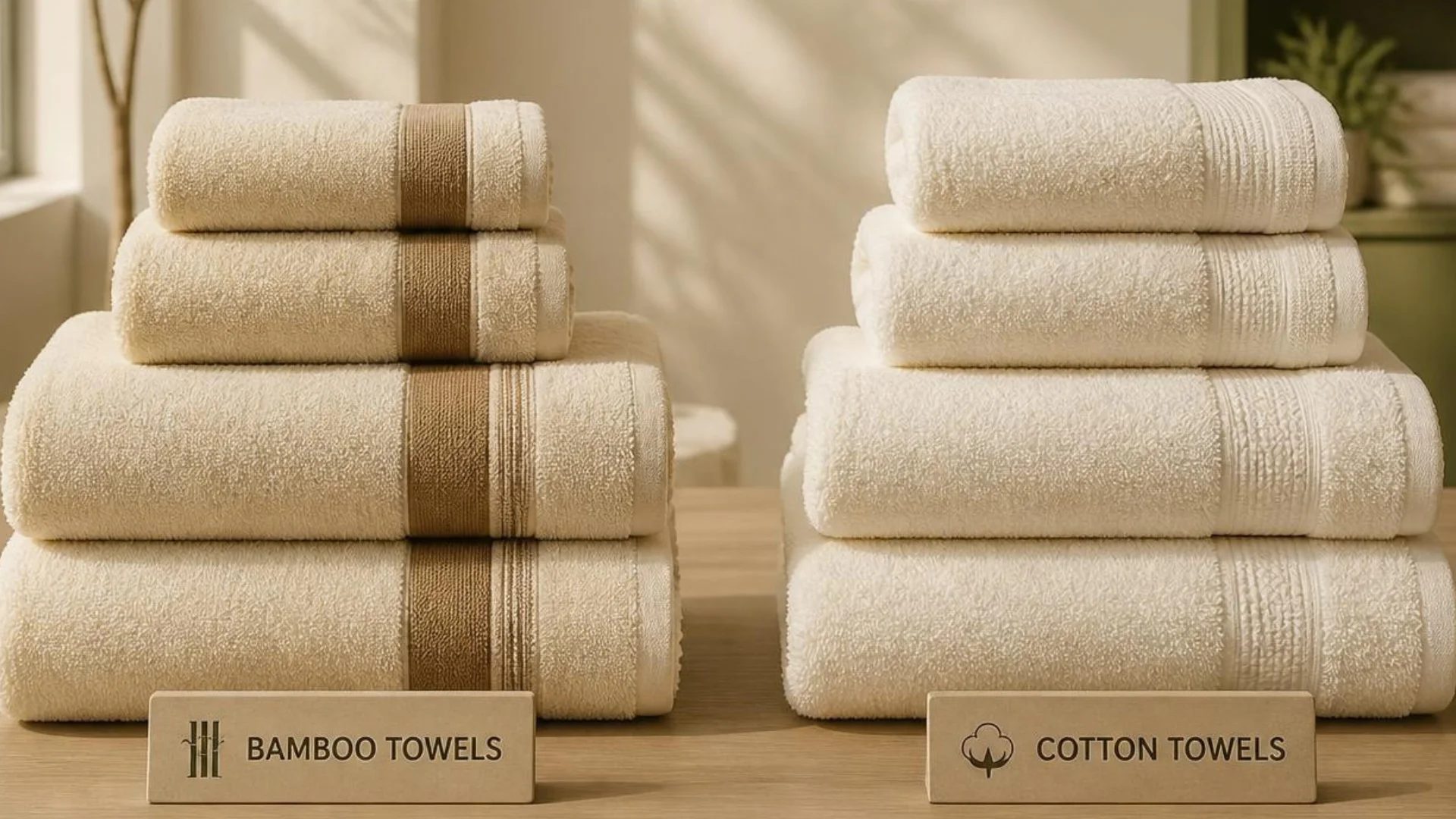
Comparing bamboo towels vs cotton towels means weighing softness, absorbency, durability and sustainability against cost and laundry demands. Bamboo offers a silky feel and eco appeal, while cotton delivers proven strength for hotels and retail. This guide covers each difference to support smarter bulk sourcing decisions.
Fiber Origin and Production
Cotton towels are made from natural seed fibers spun into yarn. Long-staple varieties (cotton with longer individual fibers) such as Aegean cotton produce smoother and stronger threads. Most bamboo towels are made from bamboo viscose (a regenerated cellulose fiber created by chemically dissolving bamboo pulp), often blended with cotton for added structure.
Production method matters as much as the raw material. Standard viscose processing relies on chemical solvents, while lyocell (a closed-loop process that recovers most of the chemicals used) is a cleaner option found in premium bamboo lines. In any bamboo vs cotton towels evaluation, buyers should ask suppliers which process is used, since it affects both quality and environmental claims.
Softness, Absorbency and Drying Time
Comfort and moisture control are the two qualities guests notice first, so they shape most purchasing decisions. When buyers compare bamboo vs cotton towels in daily use, the contrast shows up in how each fabric feels against the skin, how much water it holds and how quickly it is ready for the next use.
Softness and Hand Feel
The first difference most users notice between bamboo towels vs cotton towels is texture. Bamboo fibers have a smooth, round surface that creates a silky and cool hand feel (the tactile quality of a fabric when touched). Cotton feels plusher and more textured, especially in ring-spun (yarn twisted tightly for strength and smoothness) or zero-twist constructions.
Absorbency and Drying Performance
Bamboo viscose can hold more moisture than cotton by weight, which makes it attractive for bath and spa use. The trade-off is slower drying, a real concern in humid climates or high-turnover facilities. Cotton towels with a GSM (grams per square meter, the standard measure of towel weight and density) between 500 and 600 dry faster while staying highly absorbent.
Durability and Commercial Use
Durability is where the bamboo towels vs cotton towels comparison matters most for hospitality buyers. Bamboo viscose loses strength when wet and is more prone to pilling (small fiber balls forming on the fabric surface) under industrial washing. Long-staple cotton withstands high temperatures and frequent cycles, which is why most Turkish towels hotel collection ranges remain cotton based.
The table below summarizes the key bamboo vs cotton towels differences that buyers usually review before placing bulk orders. These values reflect general industry observations and can shift depending on yarn quality, blend ratio and weaving technique, so product samples remain the most reliable reference.
| Feature | Bamboo Towels | Cotton Towels |
| Softness | Silky, smooth, cool touch | Plush, textured, familiar |
| Absorbency | Very high | High |
| Drying time | Slower | Faster |
| Durability | Moderate, weaker when wet | High, suited to industrial laundry |
| Care | Low heat, no fabric softener | Tolerates hot washes and tumble drying |
| Eco profile | Fast-growing plant, chemical processing | Water intensive, organic options available |
| Price | Usually higher | Wide range from economy to premium |
Sustainability and Care Requirements
Bamboo grows quickly without irrigation or pesticides, which supports its eco-friendly image. However, the chemical intensity of viscose production means the finished fabric is not always as green as marketing suggests. Conventional cotton uses more water, while organic cotton and certifications such as OEKO-TEX (an independent standard that tests textiles for harmful substances) help buyers verify responsible products.
Care routines are another practical point in the bamboo vs cotton towels discussion. Bamboo needs lower wash temperatures, mild detergents and no fabric softener to keep its silky finish. Cotton handles hotter washes and tumble drying, which lowers operating costs for hotels, gyms and spas that process large volumes every day.
Which Towel Fits Your Business
The right choice depends on the end user, laundry conditions and brand positioning. Assessing bamboo towels vs cotton towels against your own operational needs gives a clearer answer than following market trends. The guidelines below show where each option performs best across common business types.
-
Luxury spas and boutique hotels: Bamboo or bamboo-cotton blends suit low-volume, premium settings where softness defines the guest experience.
-
High-occupancy hotels: Cotton is the safer choice for frequent industrial washing and longer replacement cycles.
-
Retail and home textile brands: Cotton Turkish bath towels appeal to everyday shoppers, while bamboo lines attract eco-conscious customers.
-
Beach and pool use: Lightweight cotton peshtemals (flat-woven Turkish towels that dry quickly and pack small) outperform bamboo, which is why most Turkish beach towels are cotton.
-
Hair and personal care: Bamboo reduces friction on hair, though a cotton Turkish hair towel offers better long-term durability.
Sourcing Bamboo and Cotton Towels from Turkey
Turkey is one of the world's leading textile producers, known for high-quality cotton and skilled weaving traditions. Working with experienced Turkey towel manufacturers gives buyers access to both pure cotton and bamboo blend ranges. Custom options include dobby borders (woven decorative bands along the towel edge), private labeling and tailored GSM levels.
For businesses still deciding on bamboo vs cotton towels, ordering samples of both fabrics is the most reliable way to test feel and wash performance. A trusted hotel towel manufacturer can also supply matching Turkish hand towels and wholesale bathrobes, creating a consistent collection whether the final pick is bamboo towels vs cotton towels or a blend of both.