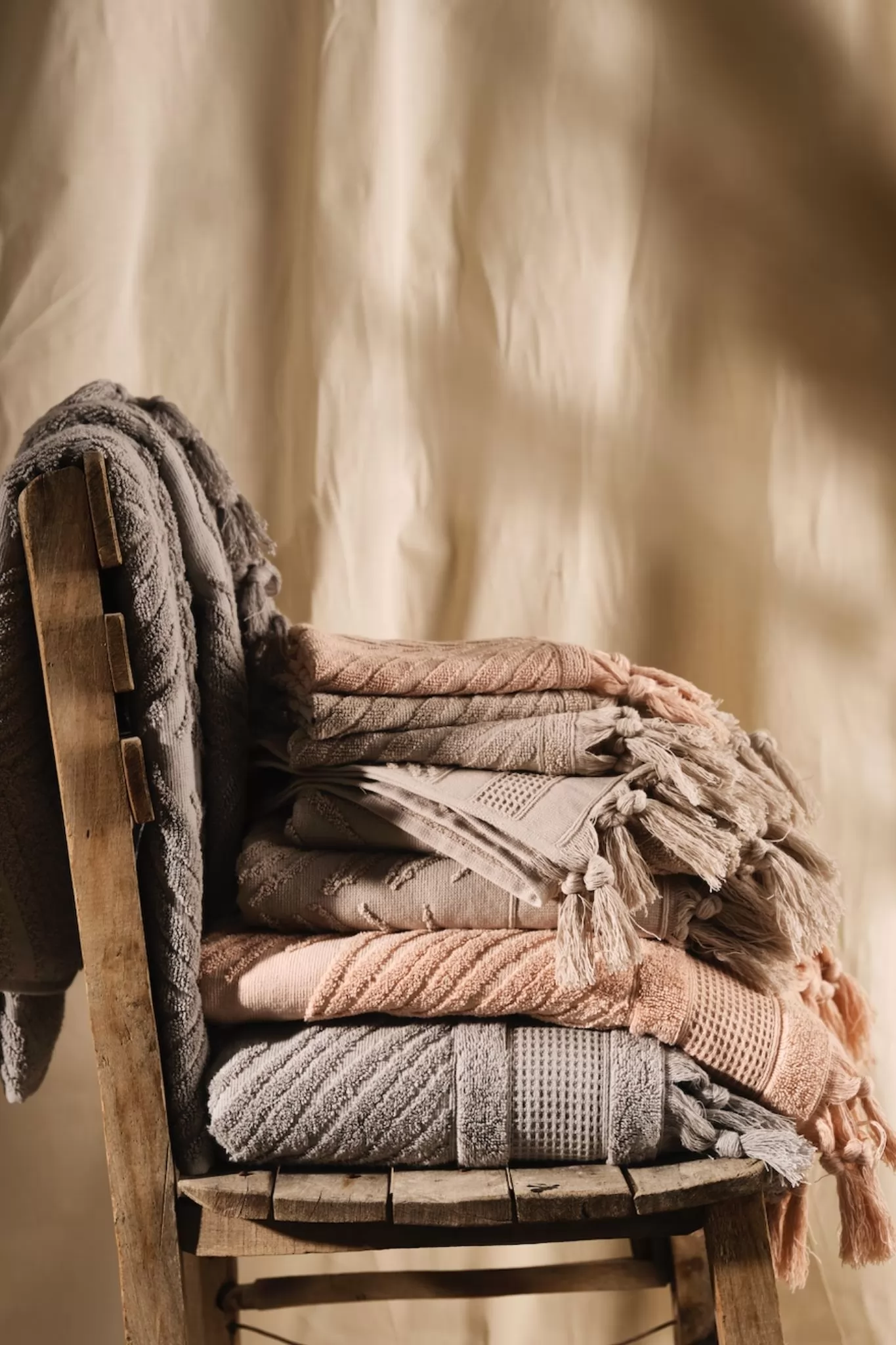
Towels are not merely a textile product but also a key item that upholds perceptions of comfort, hygiene, and quality. The quality of the cotton used is the fundamental factor determining the performance of these products. Cotton directly influences all aspects of a towel, including its lifespan, absorbency, and how it is processed.
Towels made with high-quality cotton have softer edges and are more durable. This difference is evident not only upon first use but also in long-term performance. Especially in towels subjected to frequent washing, high-quality cotton ensures that the fibers do not break, do not pill, and do not lose their color.
Low-quality cotton wears out quickly, the fabric deteriorates, and the product has a short lifespan. Softness and absorbency from the very first touch are crucial for the user’s satisfaction. Cotton quality directly impacts the customer experience in both household use and professional settings such as hotels and spas. For this reason, the selection of the towel’s raw material—cotton quality—must not be overlooked.
The Importance and Effects of Cotton Quality
Cotton is the fundamental building block of a towel and the primary factor influencing its performance. High-quality cotton possesses a durable, homogeneous, and robust structure. This structure enhances both the towel’s physical integrity and its functional properties. Long-staple cotton breaks less easily, absorbs more water, and produces less lint. Additionally, this cotton dries faster and retains its texture. In short-staple cotton, the fibers break down quickly. This leads to both visual and physical wear and tear.
The softness diminishes, and the towels become stiff. High-quality cotton is more durable against high-quality washing processes. This feature is particularly important in settings such as hotels and hospitals. The long-term maintenance of towels directly impacts operational costs. In products made with low-quality cotton, frequent replacements become necessary. This negatively affects both the budget and the customer’s health.
Key Criteria Determining Towel Performance
Most users focus on towel costs or the feel of the fabric. However, this only scratches the surface of the towel’s true performance. Technical characteristics such as water absorbency, fabric structure, and durability are just as important as the quality of the cotton used in production.
These factors determine how many times a towel can be washed, how quickly it dries, and whether it retains its shape over time. For consumers, the best towel is not only soft but also highly absorbent and durable. Even if high-quality cotton is used, the results will not meet expectations unless these characteristics are supported by proper weaving, yarn type, and production processes.
For corporate users in particular, these details have a direct impact on both cost and satisfaction. Evaluating these performance-determining criteria individually makes selecting the right product easier.
Water Absorbency
A towel’s most basic function is to absorb water quickly and effectively. The level of absorbency is directly related to cotton quality, fiber density, and yarn structure. Long-staple cotton absorbs more water, while short-staple cotton has limited absorbency. Additionally, weave density and pile height also affect absorbency.
A highly absorbent towel not only removes water from the skin but also dries quickly, making it ready for reuse in no time. This feature is indispensable in high-traffic areas such as hotels and spas. In consumer products, a towel that fails to absorb water upon first use negatively impacts the perception of quality. Therefore, high water absorbency is one of the primary evaluation criteria for a towel’s performance.
Softness and Textural Comfort
The sensation of comfort when using a towel is directly related to the quality of the fabric. The softness of the surface the user first touches depends not only on the structure of the cotton fiber but also on the weaving method. In towels made from high-quality cotton, natural softness does not diminish over time. In low-quality products, however, the fabric begins to harden after washing. The sensation of softness is not only important in terms of skin contact but is also a key factor in enhancing user satisfaction.
Especially for users with sensitive skin, the towel’s texture should not be irritating. This is even more critical in spa and baby products. The twist ratio of the yarn used in the towel’s texture, the pile height, and the processes applied during production all affect softness. Therefore, in the production of a high-quality towel, not only the cotton but also the craftsmanship is decisive.
Durability and Long-Lasting Use
The durability of towels provides a significant advantage for both personal and professional use. The factors that determine durability are as follows:
Yarn quality: Yarns made from long-staple cotton are stronger.
Weave density: Tightly woven towels retain their shape for longer.
Edge stitching: Sturdy edge construction delays wear and tear.
Wash resistance: High-quality towels are resistant to high temperatures.
A highly durable towel retains its shape even after frequent washing. It retains its color, does not pill, and does not thin out over time. This feature makes a significant difference, particularly in settings like hotels and restaurants. There is no need to replace products frequently. For end-users, durability also offers a budget-friendly choice in the long run.
The Contribution of Turkish Cotton to Towel Performance
Turkish cotton is a special type of cotton synonymous with quality in the global textile industry. Cotton grown in the Aegean Region is particularly known for its long-fiber structure. This structure ensures the towel is softer, more durable, and more absorbent. The longer fibers mean fewer connection points during weaving.
This creates a stronger and more compact towel structure. Turkish cotton stands out for its moisture-retention capacity. In towel production, this feature ensures water absorbency reaches the highest level. Additionally, this type of cotton possesses a natural luster, which enhances the visual quality of the products. Its structure, which does not harden after washing, also extends the product’s lifespan.
Turkey’s climate offers ideal conditions for cotton farming. This enables the production of high-quality products through natural methods. Towels made from Turkish cotton are preferred by both domestic and international brands. In terms of durability, softness, and absorbency, this type of cotton holds a significant place in the industry.
Methods for Consumers to Assess Cotton Quality
While cotton quality isn’t immediately apparent to the eye, it carries certain distinguishable signs when examined closely. To make informed choices when purchasing towels, certain basic checks must be performed. These points apply to both individual users and professionals making bulk purchases. A towel made from high-quality cotton stands out not only for the comfort it provides during use but also for its durability. Elements such as label information, the feel of the fabric, and overall construction provide proper guidance. Here are some criteria consumers should consider before making a purchase:
The label information should be examined. The phrase “100% cotton” indicates that the product contains natural fibers.
The country of origin should be checked. The “Made in Turkey” label may indicate the use of high-quality Turkish cotton.
Pay attention to the texture. A soft and plush texture is a sign of high-quality cotton.
Excessive shine should raise suspicion. Products containing synthetic blends may sometimes exhibit an artificial sheen.
If there is excessive pilling, the quality may be low. There should be no shedding of fibers even upon initial contact or short-term use.
The GSM (grams per square meter) value should be inquired about. High-quality towels are typically 500 GSM or higher.
By paying attention to these points, it is possible to gain a clearer understanding of cotton quality. The tactile feel is just as important a indicator as appearance. Consumers can make more informed choices and enjoy the benefit of long-lasting use by considering these criteria.
Maximizing Towel Quality Through the Right Cotton Selection
The choice of cotton when purchasing towels directly affects both the product’s softness and its lifespan. Selecting high-quality cotton not only results in a softer and more absorbent product but also ensures the towel remains in good condition for a long time. This offers a significant advantage for both individual consumers and professional establishments such as hotels and spas. Towels made from low-quality cotton wear out quickly, fade in color, and lose their texture.
The right choice of cotton, however, makes a noticeable difference from the very first use. Long-staple, naturally processed cotton with minimal synthetic additives delivers the best results in this regard. Label information, weave structure, and the manufacturer’s specifications are key factors supporting this version of the product. Paying attention to these factors during the selection process ensures not only a more comfortable user experience but also long-term energy savings. The right choice of cotton maximizes both quality and user satisfaction. With Selin Tekstil, you can access a wide range of towel products made from the highest quality cotton.