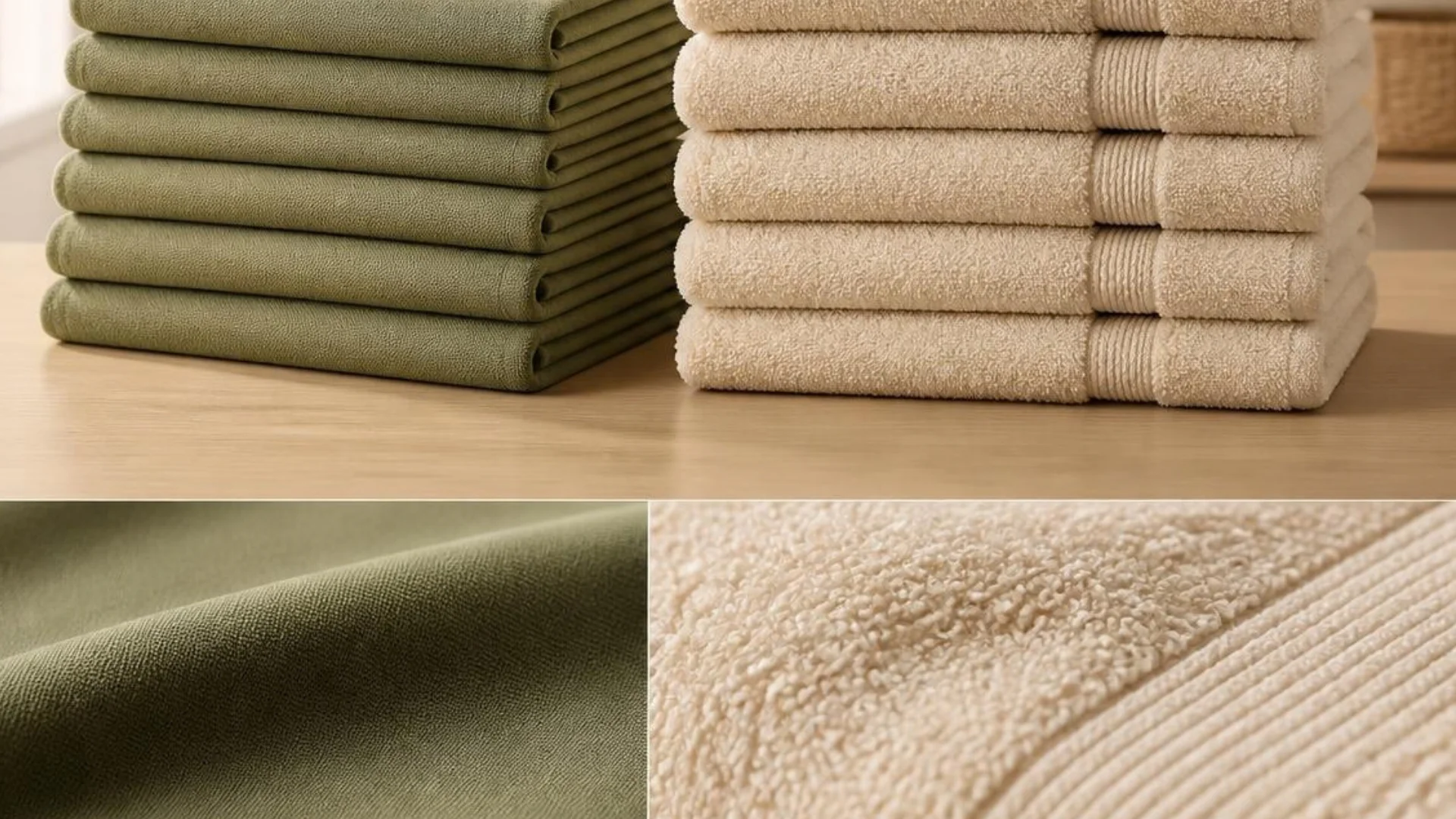
The microfiber vs cotton towels choice comes down to absorbency, drying speed, comfort, durability, cost and environmental impact. Microfiber is lightweight and quick drying, while cotton offers a soft, breathable feel and long service life. This guide compares both fabrics to help hotels, retailers and brands source the right towels.
Material Composition and Structure
Microfiber is a synthetic fabric made from polyester and polyamide (a nylon-based polymer that adds softness and absorbency). Its fibers are finer than 1 denier (a unit that measures fiber thickness), and they are often split during production to create tiny channels that trap water and dirt. This structure explains why microfiber feels thin yet absorbs quickly.
Cotton towels are woven from natural cellulose fibers, usually in a terry construction (a looped pile weave that increases surface area and absorbency). Long-staple cotton (cotton with longer individual fibers) creates stronger and softer yarn. In a microfiber towel vs cotton towel comparison, this natural structure is what gives cotton its breathable and plush character.
Performance in Everyday Use
Guests and end users judge a towel mainly by how well it dries the skin and how it feels during use. A cotton towel vs microfiber towel test in daily conditions shows clear differences in absorbency, drying time and comfort, and each difference carries different weight depending on the setting where the towel will be used.
Absorbency and Drying Speed
Microfiber can absorb several times its own weight in water and releases moisture quickly, so it dries in a fraction of the time cotton needs. Cotton holds more total water per towel, especially at a GSM (grams per square meter, the standard measure of towel weight and density) of 500 to 700. This makes cotton the winner of the cotton towel vs microfiber towel match for full body drying.
Drying speed also affects daily operations. Microfiber towels can be reused within hours, which suits gyms, pools and busy changing rooms. Cotton needs longer drying time, but its greater capacity means one towel is usually enough per guest, reducing the total number of pieces handled in each laundry cycle.
Feel on Skin and Hair
Microfiber has a smooth, slightly grippy surface that some users find less pleasant on dry skin. Its low friction, however, gives it an edge in any microfiber towel vs cotton towel comparison for hair care, since it reduces frizz and breakage. Ring-spun (yarn twisted tightly for strength and smoothness) cotton offers the plush hand feel (the tactile quality of fabric) most guests expect.
Breathability is another comfort factor. Cotton allows air to move through its fibers, so it feels fresh even in warm climates, while microfiber can trap heat and feel clingy on humid days. For luxury accommodation, this natural comfort is often the deciding point in the cotton towel vs microfiber towel choice.
Durability, Care and Lifespan
Durability is a key factor in the microfiber vs cotton towels decision for commercial buyers. Microfiber resists shrinking and fading, but high heat can damage its synthetic fibers and fabric softener clogs the channels that give it absorbency. Quality cotton tolerates hot industrial washes and tumble drying, which is why most Turkish towels hotel collection ranges are made from cotton.
Lifespan also depends on how towels are handled. Well-made cotton towels typically last hundreds of commercial wash cycles before showing wear, and they often soften further with use. Microfiber keeps its color longer but can lose absorbency over time if washed incorrectly, so staff training and correct detergents matter when this fabric is used in bulk.
The table below shows the main microfiber towel vs cotton towel differences buyers usually review before bulk orders. Actual results vary with fiber quality, GSM and weaving method, so testing samples under your own laundry conditions gives the most accurate picture of long-term performance.
| Feature | Microfiber Towels | Cotton Towels |
| Absorbency | Fast, high per gram | High total capacity |
| Drying time | Very fast | Moderate |
| Feel | Smooth, thin, slightly grippy | Plush, soft, breathable |
| Weight and packing | Very light, compact | Heavier, bulkier |
| Heat tolerance | Low, sensitive to high temperatures | High, suits industrial laundry |
| Care | No fabric softener, low heat | Hot washes and tumble drying |
| Eco profile | Petroleum based, sheds microplastics | Natural, biodegradable |
Cost and Value for Bulk Buyers
Purchase price is usually lower for microfiber, since synthetic fibers are cheaper to produce and lighter to ship. However, unit price alone does not show the real cost. When the microfiber vs cotton towels comparison includes replacement frequency, laundry energy and guest satisfaction, cotton often delivers better long-term value for hospitality businesses.
Total cost of ownership (the full cost of a product across purchase, use, maintenance and replacement) is the most useful measure for procurement teams. In a cotton towel vs microfiber towel budget review, cotton may cost more upfront but lasts longer and supports a premium brand image. Microfiber stays cost-effective for high-rotation uses such as gyms and cleaning.
Environmental Impact
Microfiber is made from petroleum-based materials and sheds microplastics (tiny plastic particles that enter waterways during washing). This is a growing concern for brands with sustainability goals. From an environmental point of view, the comparison generally favors cotton, especially when buyers choose organic or responsibly grown fiber from transparent supply chains.
Cotton is biodegradable and renewable, although conventional farming uses significant amounts of water. Certifications such as OEKO-TEX (an independent standard that tests textiles for harmful substances) help buyers verify safer products. For eco-conscious hotels and retailers, certified cotton offers a stronger sustainability story and fewer questions from environmentally aware customers.
Best Uses for Each Towel Type
Neither fabric is the better option in every situation, since each serves different needs. Matching the microfiber vs cotton towels choice to the end use gives better results than choosing one fabric for everything. The following guidelines show where each option performs best across common business settings.
-
Hotels and spas: Cotton delivers the comfort and durability guests expect, which is why Turkish bath towels remain the standard in hospitality bathrooms.
-
Gyms and sports clubs: Microfiber is light, compact and dries fast between sessions, making it practical for high-rotation fitness use.
-
Beach and travel: Microfiber packs small, though cotton peshtemals (flat-woven Turkish towels that dry quickly) offer a natural alternative, as seen in Turkish beach towels.
-
Hair care: Microfiber reduces frizz, while a cotton Turkish hair towel provides a softer and more breathable option for salons and retail.
-
Kitchen and cleaning: Microfiber excels at wiping surfaces, but cotton Turkish kitchen towels are preferred for drying dishes and food contact.
Sourcing Cotton and Microfiber Towels from Turkey
Turkey is known worldwide for high-quality cotton and advanced towel weaving. Partnering with experienced Turkey towel manufacturers gives buyers access to premium cotton ranges with custom GSM, colors, dobby borders (woven decorative bands along the towel edge) and private labeling. Many suppliers can also guide the microfiber towel vs cotton towel decision based on your target market.
Businesses still weighing microfiber vs cotton towels should request samples and test them in real conditions. A reliable hotel towel manufacturer can also supply matching Turkish hand towels and wholesale bathrobes, so whether the final microfiber towel vs cotton towel choice is one fabric or a mix, the collection stays consistent.