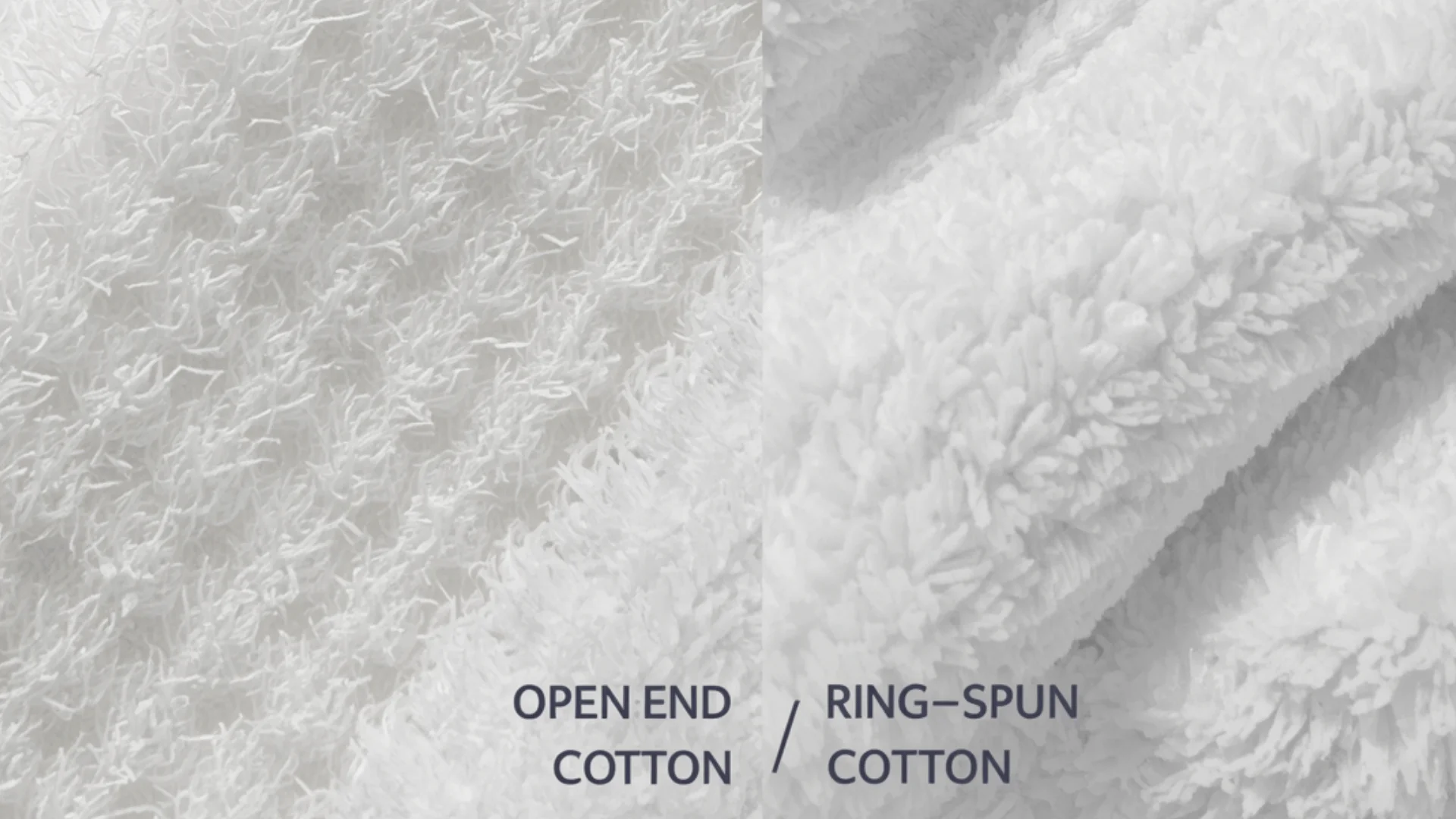
Cotton quality plays a major role in determining the softness, durability, absorbency, and overall performance of towels. Among the most commonly used yarn types in towel production are open-end cotton and ring-spun cotton. Although both are widely used in the textile industry, they offer different advantages depending on the intended usage area.
Hotels, spas, gyms, and hospitality businesses often compare these two fabric structures when selecting commercial towels. Businesses working with an experienced towel manufacturer usually evaluate factors such as long-term durability, comfort, operational costs, and washing resistance before deciding which cotton type is more suitable for their needs.
What Is Open-End Cotton?
Open-end cotton is produced using a faster spinning method where cotton fibers are twisted through a rotor-based system instead of traditional spinning rings. This manufacturing technique creates yarn more efficiently and at lower production costs.
Towels made from open-end cotton generally have a thicker and slightly rougher texture compared to premium cotton fabrics. They are commonly used in environments where high-volume production and cost efficiency are priorities.
Because the production process is faster, open-end cotton towels are often preferred for budget-focused hospitality operations, gyms, promotional textiles, and large-scale commercial laundry systems.
What Is Ring-Spun Cotton?
Ring-spun cotton is produced through a more refined spinning process that continuously twists and softens cotton fibers. This method creates a smoother, finer, and stronger yarn structure compared to open-end production.
Ring-spun towels are known for their soft surface, improved durability, and lower lint production. The smoother yarn structure also contributes to a more premium appearance and better long-term fabric performance.
Many luxury hospitality businesses and premium textile suppliers prefer ring-spun cotton because it balances comfort, absorbency, and durability more effectively than standard yarn structures.
Main Differences Between Open-End and Ring-Spun Towels
Although both towel types are made from cotton, their production methods create noticeable differences in texture, softness, durability, and appearance.
The main differences generally include:
| Feature | Open-End Cotton | Ring-Spun Cotton |
|---|---|---|
| Surface / Softness | Thicker and coarser | Smoother and softer |
| Durability | Good, but stiffens over time | Stronger, holds shape longer |
| Absorbency | Acceptable, drops with washing | Higher and more consistent |
| Linting | Sheds more lint | Sheds less lint |
| Production speed | Faster, high volume | Slower, more detailed process |
| Cost | More economical | Higher, better long-term value |
| Best use | Gym, budget, promotional | Hotel, spa, premium segment |
These differences directly affect user experience and long-term operational performance. Commercial buyers usually select towel types based on their business priorities and budget expectations.
Which Cotton Type Is More Durable for Commercial Use?
Durability is one of the most important considerations for commercial towel purchasing. Towels used in hotels, spas, and gyms must tolerate continuous washing, drying, and daily handling without losing structural quality.
Ring-spun cotton generally offers higher durability because the fibers are twisted more tightly and evenly during production. This stronger yarn structure helps towels maintain their softness and appearance after repeated industrial washing cycles.
Open-end towels can still perform well in high-volume environments, but they may lose softness and structural consistency faster over time. Businesses focused on long-term textile quality often prefer products sourced from reliable Turkish towel manufacturers because premium yarn construction supports longer product lifespan.
Absorbency Comparison: Open-End vs Ring-Spun Towels
Absorbency directly affects how efficiently towels perform in commercial and residential environments. Towels that absorb moisture quickly improve comfort while reducing operational inefficiencies in hospitality businesses.
Ring-spun cotton typically provides better moisture absorption because of its smoother and denser yarn structure. The tightly twisted fibers help create a more uniform surface that retains water effectively.
Open-end towels can still offer acceptable absorbency, especially in budget-focused commercial settings, but they may become rougher and less efficient after repeated washing cycles.
For businesses where guest experience and textile quality are important, absorbency performance often becomes a major deciding factor.
Softness and Comfort Differences Between the Two Fabrics
One of the most noticeable differences between these towel types is surface softness. Ring-spun cotton creates a smoother and softer texture because the yarn fibers are refined during the spinning process.
This softer surface improves comfort for guests and daily users, especially in hotels, spas, and wellness facilities where textile quality directly affects customer perception.
Open-end towels usually feel heavier and slightly rougher. While they can still provide functional performance, they generally do not deliver the same premium comfort experience associated with ring-spun fabrics.
For businesses targeting luxury hospitality positioning, fabric softness often becomes an important branding element.
Which Towel Type Is Better for Hotels and Spas?
Hotels and spas typically prioritize guest comfort, premium appearance, and long-term textile performance. Because towels are used frequently and contribute directly to customer satisfaction, fabric quality becomes a key operational consideration.
Ring-spun towels are commonly preferred in upscale hospitality environments because they provide better softness, higher absorbency, and a cleaner visual appearance. Their lower lint production also supports better long-term maintenance results.
Open-end towels may still be suitable for fitness centers, budget accommodations, or large-scale laundry operations where cost efficiency is more important than luxury presentation.
The ideal choice often depends on brand positioning, guest expectations, and operational budget planning.
Cost Differences Between Open-End and Ring-Spun Towels
Production cost is one of the biggest differences between these two towel categories. Open-end cotton is manufactured through a faster and more economical spinning process, making these towels generally more affordable.
Ring-spun cotton requires more refined processing and higher production precision. This increases manufacturing costs but also improves fabric quality, softness, and durability.
Businesses must balance short-term purchasing costs against long-term operational performance. While ring-spun towels may require higher initial investment, their extended lifespan often improves overall cost efficiency over time.
Many hospitality businesses evaluate replacement frequency, maintenance expenses, and guest satisfaction together when comparing towel costs.
How to Choose the Right Cotton Type for Your Business?
Choosing between open-end and ring-spun cotton depends largely on operational priorities, customer expectations, and budget structure. Different hospitality sectors may require different textile performance characteristics.
When selecting towel types, businesses should evaluate:
-
Expected washing frequency.
-
Desired softness level.
-
Guest experience priorities.
-
Budget limitations.
-
Long-term durability expectations.
-
Absorbency performance needs.
-
Brand positioning within the hospitality market.
Understanding these factors helps businesses make more efficient textile purchasing decisions while reducing unnecessary replacement costs.
Why Premium Towel Brands Prefer Ring-Spun Cotton?
Premium towel brands often prioritize ring-spun cotton because it offers a stronger balance between luxury feel and long-term durability. Modern hospitality consumers increasingly expect towels that remain soft, absorbent, and visually clean even after repeated use.
The refined yarn structure helps maintain texture consistency and reduces visible wear over time. Lower lint production and improved fabric stability also support easier maintenance for commercial operations.
As hospitality standards continue evolving, many premium textile brands prefer ring-spun cotton because it aligns more effectively with modern expectations for comfort, quality, and long-term performance.