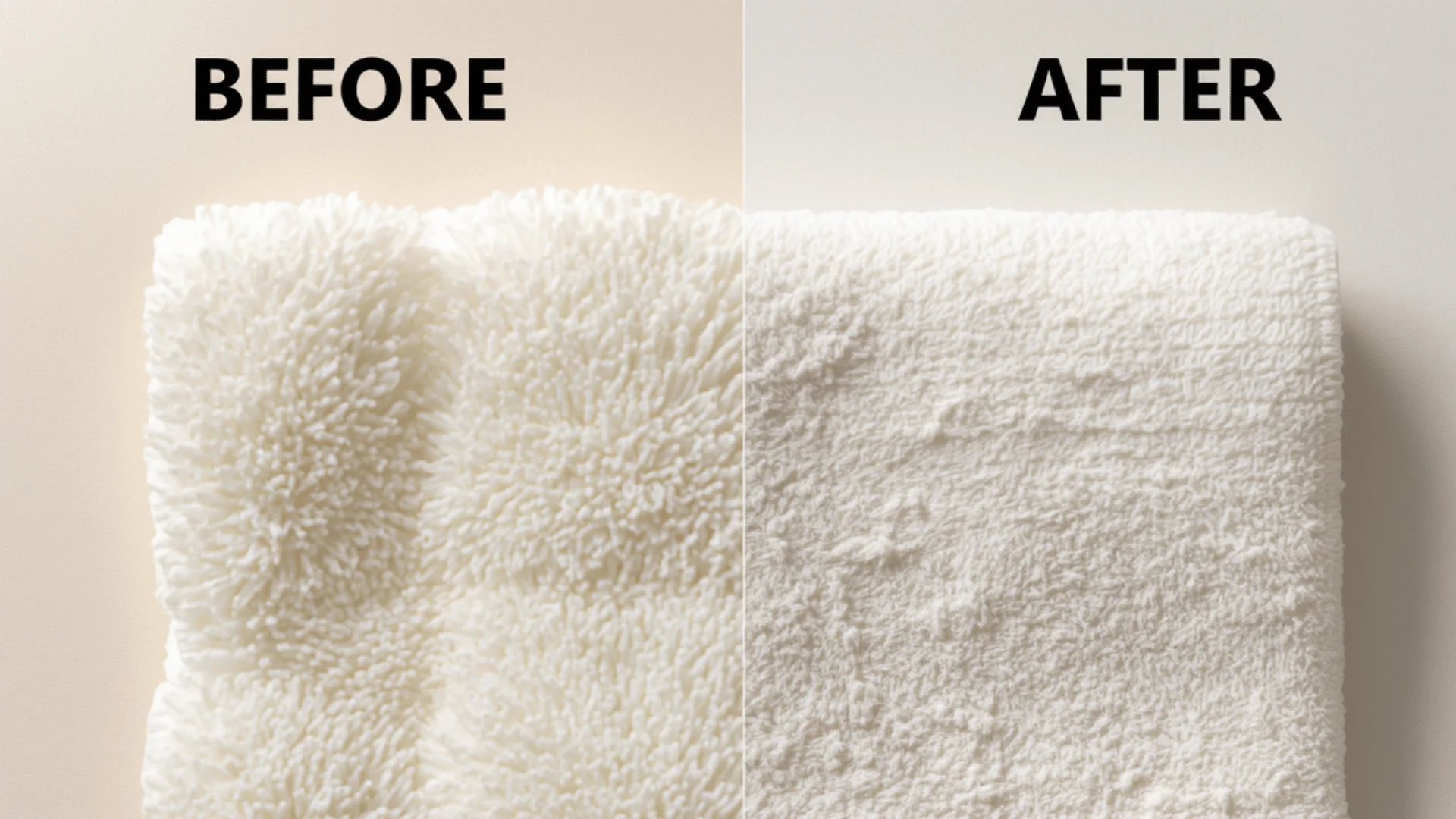
Towels lose their original color through a mix of water quality, washing habits, chemical exposure and fabric quality, and the damage usually builds up slowly over many cycles. Hard water, bleach, high temperatures, detergent and softener residue, sunlight, skincare ingredients and poor sorting are the most common triggers, while low-grade dyes and cotton speed up the process. Understanding each cause and following consistent care routines helps homes and hospitality businesses keep towels bright and uniform for longer.
Hard Water and Mineral Deposits
Among the factors that explain what causes towels to discolor, hard water is one of the most overlooked. Hard water (water with high levels of dissolved calcium and magnesium) leaves mineral deposits inside the cotton loops after every wash. These deposits give white towels a dull gray or yellow tint and make colored towels look faded and flat.
Mineral buildup also binds with detergent and body oils, which locks discoloration deeper into the fibers. Using a water softener, adding white vinegar to the rinse cycle or choosing a detergent formulated for hard water helps prevent this layer from forming. In commercial laundries, water treatment systems are the most reliable way to keep towel color consistent.
Excessive Bleach Usage
Chlorine bleach is effective for sanitizing, but frequent or undiluted use breaks down both dyes and cotton fibers. On colored towels it creates pale patches and uneven fading, while on white towels it can cause yellowing as damaged fibers react with minerals and residues. Over time, the fabric also becomes thinner and weaker.
A safer option is oxygen bleach (a hydrogen peroxide based whitener that is gentler on color and fibers). When chlorine bleach is necessary for hygiene, it should be diluted correctly and used only occasionally. Hospitality operators usually follow strict dosing rules to balance sanitation with towel lifespan.
Low-Quality Dyes and Poor Color Fastness
Color fastness (a fabric's ability to keep its color during washing, rubbing and light exposure) depends largely on the dye and dyeing process. Towels colored with low-cost dyes fade quickly because the pigment does not bond properly with the cotton. In many cases, this production quality is the real answer to what causes towels to discolor even when care routines are correct.
Reactive dyes (dyes that form a chemical bond with cotton fibers) offer much stronger color retention than cheaper alternatives. Professional bath towel manufacturers test color fastness against washing, heat and chemicals before products reach the market. For businesses, this testing protects brand consistency across hundreds of towels.
Frequent Industrial Washing
Towels in hotels, gyms and hospitals may go through hundreds of wash cycles during their lifespan. Each cycle combines heat, mechanical friction, strong detergents and high-speed spinning, which gradually wears down both color and surface texture. The result is faster fading compared with towels used at home.
Choosing towels designed specifically for commercial laundering makes a clear difference in replacement costs. An experienced hotel towel manufacturer uses stronger yarns, higher color fastness standards and reinforced hems to help towels withstand intensive industrial cycles.
High Washing Temperatures
Hot water removes bacteria and stains effectively, but repeated exposure to very high temperatures weakens dye stability. Colored towels washed at 60°C (140°F) or above lose vibrancy faster, and dark shades often fade unevenly. Excess heat also tightens cotton fibers, leading to shrinkage and a rougher feel.
Most colored towels keep their tone best at 30 to 40°C (86 to 104°F), while hotter cycles should be reserved for whites and heavily soiled items. Commercial laundries adjust temperatures by towel color and hygiene requirements to protect textile quality over time.
Detergent Residue Build-Up
Using too much detergent, or running short rinse cycles, leaves soap trapped inside towel fibers. This residue attracts dirt and body oils, creating a dingy, grayish tone that ordinary washing cannot remove. For many households, residue is the hidden reason behind what causes towels to discolor while they still look clean.
Optical brighteners (chemicals in some detergents that make fabrics appear whiter under light) can also leave uneven tones on colored towels. Using half the recommended dose, choosing a mild detergent and adding an extra rinse keep fibers clean and colors even.
Exposure to Direct Sunlight
Sunlight dries towels quickly and naturally, but long exposure to UV rays (ultraviolet radiation that breaks down dye molecules) fades colors over time. Bright and dark towels are the most vulnerable, and fading often appears in stripes where the towel was folded over a line or rail.
Drying colored towels in shade or turning them inside out reduces UV damage. Products that spend a lot of time outdoors, such as Turkish beach towels, benefit from high color fastness to light so they stay vivid through many sunny days.
Improper Sorting During Laundry
Washing towels together with dark clothing or new, unwashed textiles often causes dye transfer (loose dye migrating from one fabric to another). White and light towels quickly pick up gray, blue or pink tints that are difficult to reverse. Mixed loads also expose towels to zippers and synthetic fibers that cause surface wear.
Sorting by color and fabric type is one of the simplest ways to prevent discoloration. Washing heavily soiled items like Turkish kitchen towels separately from bathroom towels also keeps grease and food stains from spreading to other pieces.
Chemical Reactions from Skincare Products
Many people are surprised to learn that skincare is a major part of what causes towels to discolor. Benzoyl peroxide (an acne-fighting ingredient with strong bleaching power) leaves orange or white spots on colored towels, even in small amounts. Retinoids, self-tanners, hair dyes and some facial cleansers can also stain or bleach cotton.
Using dedicated white towels for face care, or keeping separate Turkish hand towels for skincare routines, limits visible damage. Rinsing hands and face thoroughly before drying and washing affected towels promptly also reduces permanent marks.
Poor-Quality Cotton Fibers
Cotton quality influences how evenly a towel absorbs dye and how long it keeps it. Short-staple cotton (cotton with short fibers that produce weaker yarn) breaks down faster and releases fibers during washing, which makes the surface look faded and fuzzy. Pilling (small fiber balls on the fabric surface) adds to this worn appearance.
Long-staple and ring-spun cotton (yarn made by twisting fibers tightly for strength and smoothness) hold dye more evenly and resist wear. This is why many buyers source from established Turkey towel manufacturers, where premium Turkish cotton supports long-lasting color and softness.
Incorrect Drying Methods
High dryer heat and over-drying damage both fibers and dyes, causing towels to fade and feel harsh. Uneven airflow in an overloaded dryer can also create patchy color changes. On the other hand, leaving towels damp for long periods encourages mildew (a mold that grows on wet fabric), which leaves gray or black spots.
Drying on low or medium heat and removing towels as soon as they are dry protects both color and texture. Air-dried towels should hang fully open in a well-ventilated area so they dry quickly and evenly.
Chlorine and Harsh Cleaning Chemicals
Chlorine does not only come from laundry bleach. Pool water, bathroom cleaners and disinfectants can all leave bleached spots when towels come into contact with them. Towels used in spas, pools and healthcare facilities are especially exposed to this type of chemical fading.
Some cleaning agents also react with minerals and detergent residue, creating yellow or brown stains. Rinsing pool towels in clean water soon after use and keeping cleaning products away from stored linens help prevent this damage.
Fabric Softener Residue
Fabric softener coats fibers with a waxy layer that traps dirt, oils and minerals. Over time, this buildup gives towels a dull, uneven tone and reduces their ability to absorb water. White towels in particular may develop a yellowish cast from repeated softener use.
Skipping softener entirely or replacing it with half a cup of white vinegar in the rinse keeps towels both bright and absorbent. An occasional strip wash (a deep cleaning cycle that removes accumulated residue) helps restore towels that have already lost their color clarity.
Aging and Fiber Wear Over Time
Even well-maintained towels gradually lose color as fibers wear through use, friction and washing. High-contact areas such as the center and edges usually fade first, which creates an uneven look. This natural aging cannot be stopped completely, but it can be slowed.
Rotating towels regularly spreads wear evenly across the whole set. Buying a few extra pieces and alternating them also extends the life of each towel and keeps the overall collection looking uniform.
Lack of Proper Towel Maintenance
Most discoloration problems come from small habits repeated over many washes rather than a single mistake. Once the main triggers are clear, preventing the issue becomes a matter of consistent care. Anyone who understands what causes towels to discolor can protect their towels with a few simple routines.
- Use balanced detergent amounts: Half the recommended dose prevents residue that dulls colors.
- Limit bleach exposure: Choose oxygen bleach and use chlorine only when hygiene requires it.
- Sort every load: Wash whites, lights and darks separately to avoid dye transfer.
- Keep temperatures moderate: Wash colored towels at 30 to 40°C and dry on low or medium heat.
- Avoid damp storage: Dry towels completely before folding to prevent mildew stains.
- Follow the care label: Fabric-specific instructions protect both color and fiber quality.
Applying these steps consistently keeps towels brighter, softer and more uniform for much longer. Whether at home or in a busy hospitality operation, good maintenance remains the most cost-effective way to reduce discoloration and extend towel life.